The midwinter transformation
I enjoyed a pretty simple Christmas, just two of us with very few gifts and visitors. It was lovely, calm, with very little pressure to be joyful, festive or even happy – what a relief and so different from most of my 70 odd previous Christmases – I suspect I am finally starting to grow up and chill out.
Multi-tasking
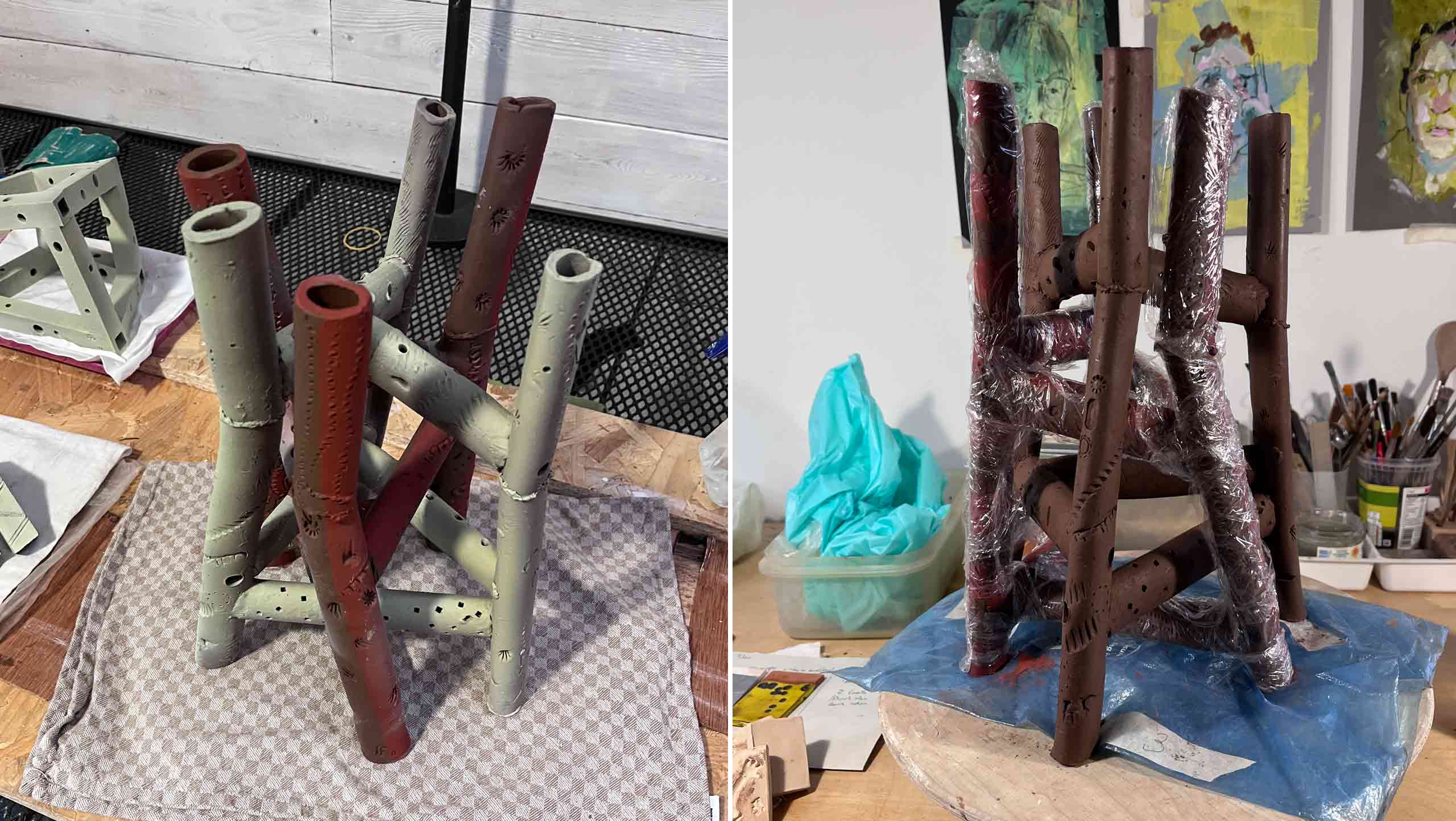
I am working on multiple projects all at different stages of development at the time of writing. I am finding that this pattern is both familiar and difficult. I do not think of myself as a natural multi-tasker but it’s in the nature of my chosen medium that the work process is divided into stages. This means that at any time I will have a few artworks at each of the seven stages I have identified:
When the making process is done the work has sometimes to be sprayed with slip before leaving to dry ready for bisque firing. That’s a bit of a full stop but it’s only the first chapter. After the first firing I have to prepare to glaze the work. This is often problematic as I usually conceive my works in monochrome, in many ways it would be easier not to glaze them and I have left works at the bisque stage in the past for a variety of reasons including that one. Any single work goes through a set of processes with varying amounts of time between each one depending on how busy I am and how distracted I get by all the diverse things competing for my attention. This summer for instance, a lot of artworks had to wait while I worked on the studio building.
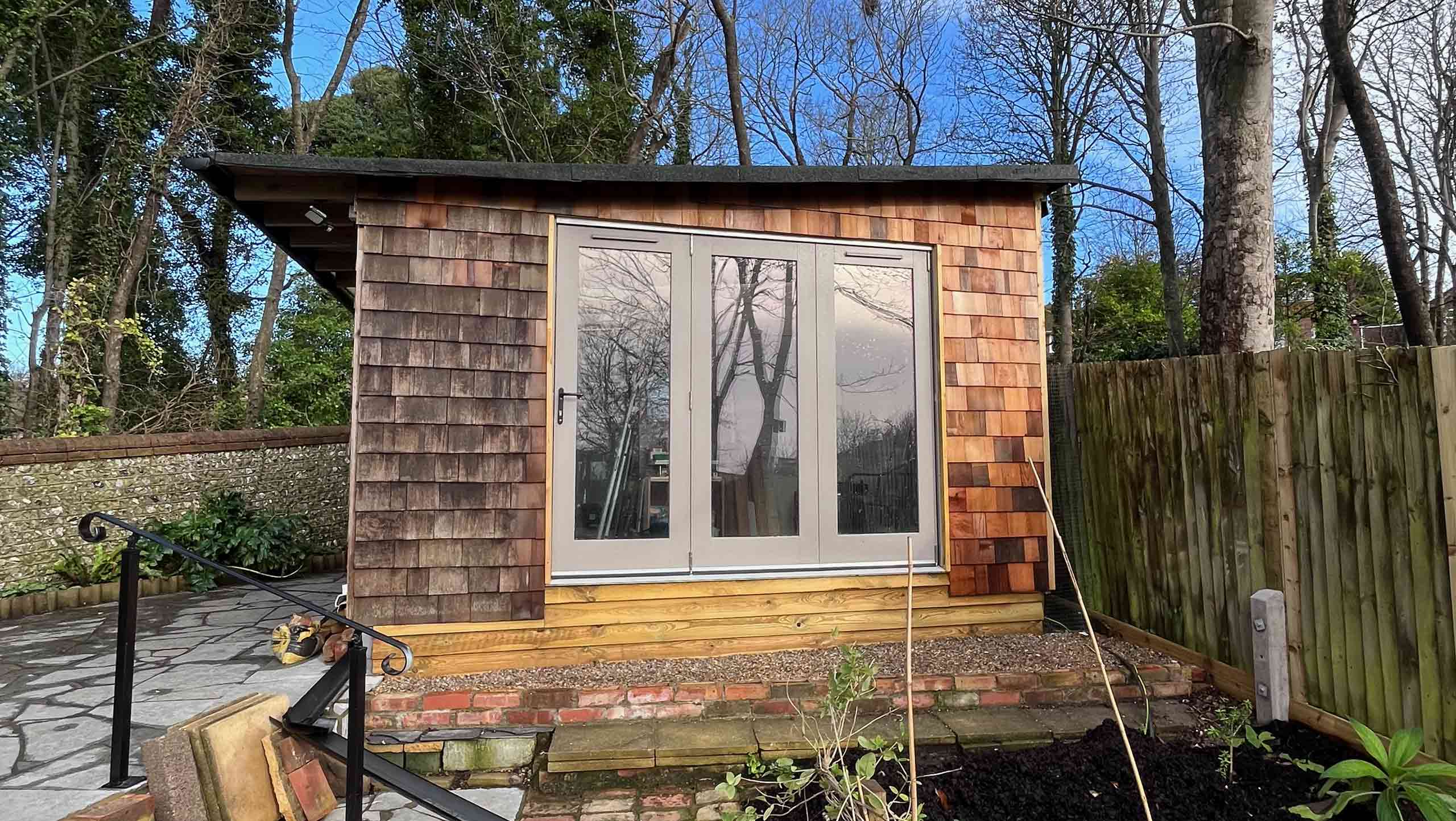
Those diversions mean things take longer but also (on the plus side) that I have more time to consider each stage, occasionally the delays are so long I start to change my mind about the work or lose track of what I originally intended. Moving house has been one of those things that inevitably slowed things down. Now after two whole years I feel like all the tasks involved in that phase are becoming less demanding.
Prospecting for good ideas
As an artist self questioning is an essential part of the process. In conceiving my work I have to seek for true things and filter out the glib, hackneyed, and false ideas. The prospecting for worthwhile things to make, of creating unexpected things, the process of disrupting my patterns constructively may sound quite etherial but is in practice, hard work.
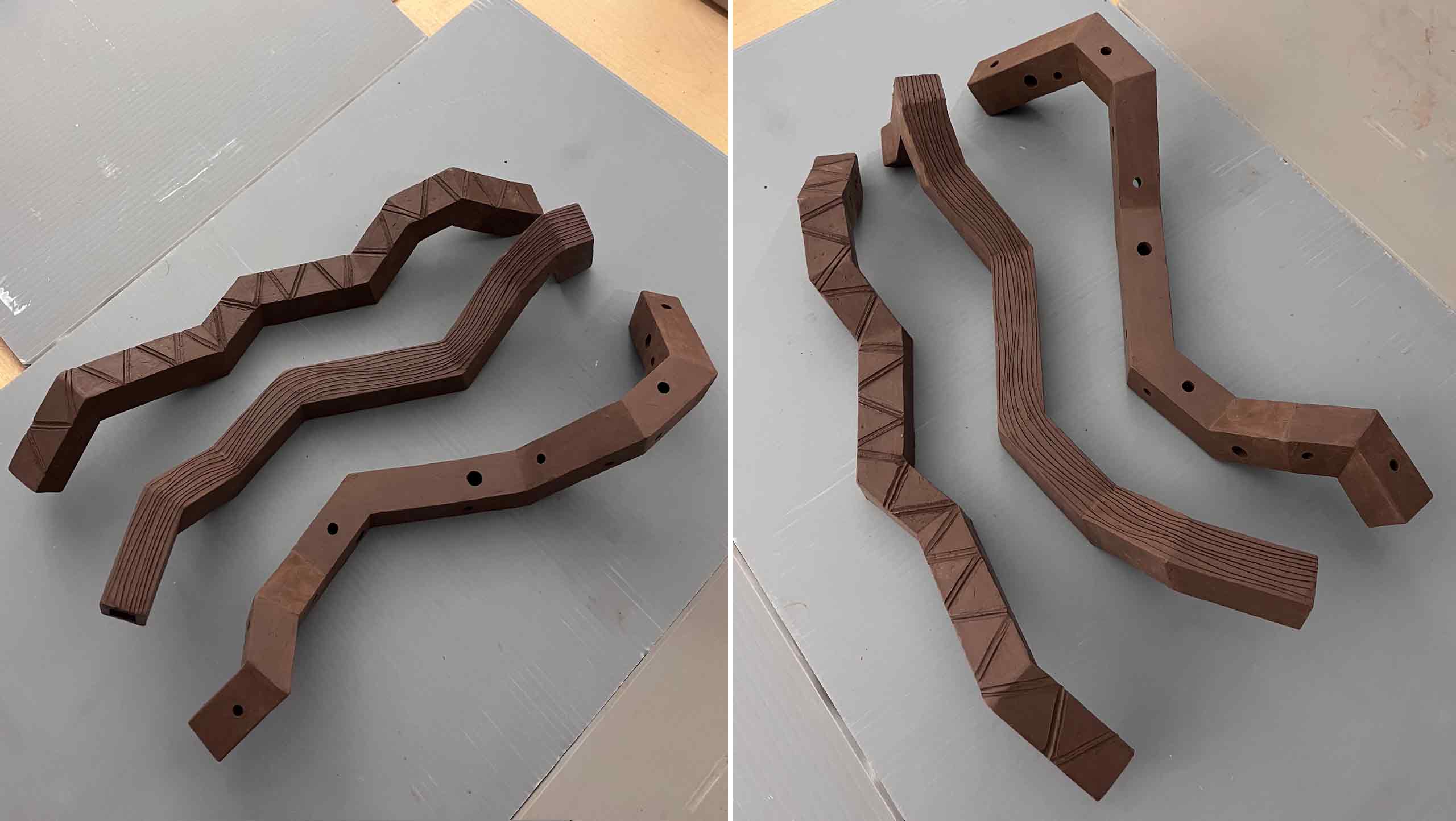
To manage this part of the process doubt has to be kept at bay just as much as a healthy questioning of almost everything has to be observed. This balance can be precarious and sometimes it gets hard to see the wood for the trees. It becomes hard to maintain your sense of purpose when the rewards are off in the distance and the technical (e.g. How will it fit in the kiln? What colour is this sculpture going to be and how do I make it so?) or artistic problems (e.g. What is this artwork saying? Are the ideas in this work clear or do they need refining or to be made more explicit?) are right here in the foreground right now. Creating artworks starts with a sense of urgency for me, of wanting to get ideas down on paper then realised in three dimensions before too many questions arise and obscure the original vision.
I often use whatever I have sketched out in my sketchbook to keep the artwork on track as it goes through the different stages. Sometimes I make a sketch if the work has evolved away from the original idea and I often have to work out possible glazing routes using drawn or painted diagrams.
So part of the job is to manage the quandaries involved in conceiving the work in such a way that you keep them in mind, do not ignore them but don’t let them get in the way of doing the work. I have been developing my approach to this since I was an art student frequently stymied by my own self doubt. I have now found mentors and artists groups to help me deal with something that is in many ways an invisible or private procedure that most artists have to go through. I no longer have to deal with it entirely on my own. I believe this is a very positive and contemporary phenomenon brought about largely in response to the rising interest in understanding personal psychologies. I should add that I have had to seek out a good deal of psycho-therapeutic and analytic input over the last forty years to get to this point. There is increasingly more awareness that artists need a wide range of support services in order to make their practices sustainable and sustaining.
There has been a flowering of small businesses that provide moral support, marketing advice and peer networking in the last few years to meet these needs – see the artists links page on this site for some examples. The caricature of the starving artist wrestling with his or her muse alone in a draughty garret is gradually crumbling away.
I am going to try and write about developing artistic ideas (often referred to as ‘inspiration’) in a future newsletter/blog post.
Subscribe to The Glimmerists
This article is based on one published at the start of December 2025 in my email newsletter The Glimmerists. If you subscribe you get the article before the other version is published here on the website. There is more in the newsletter too including a feature artwork piece in each issue with insights about how artworks are made and how the ideas behind them evolve.
You also get a discount code for a set of limited edition prints of my work.
Did you know – about Makers Headroom?
Once a week on a Monday afternoon at 2.30 until 4.30pm I run a Zoom group for Artists and Makers to simply work in their studios in the virtual company of others. It’s a very simple idea and seems to appeal to artists because it’s an appointment to work. It holds you to account with a group of others in a very light contract which says “ This is a time for us work on what we love doing”. It has operated really well for a couple of years now. You can do anything you like – make, write, think, and just be there. The details of how to join on are on the Makers Headroom web page on this site.